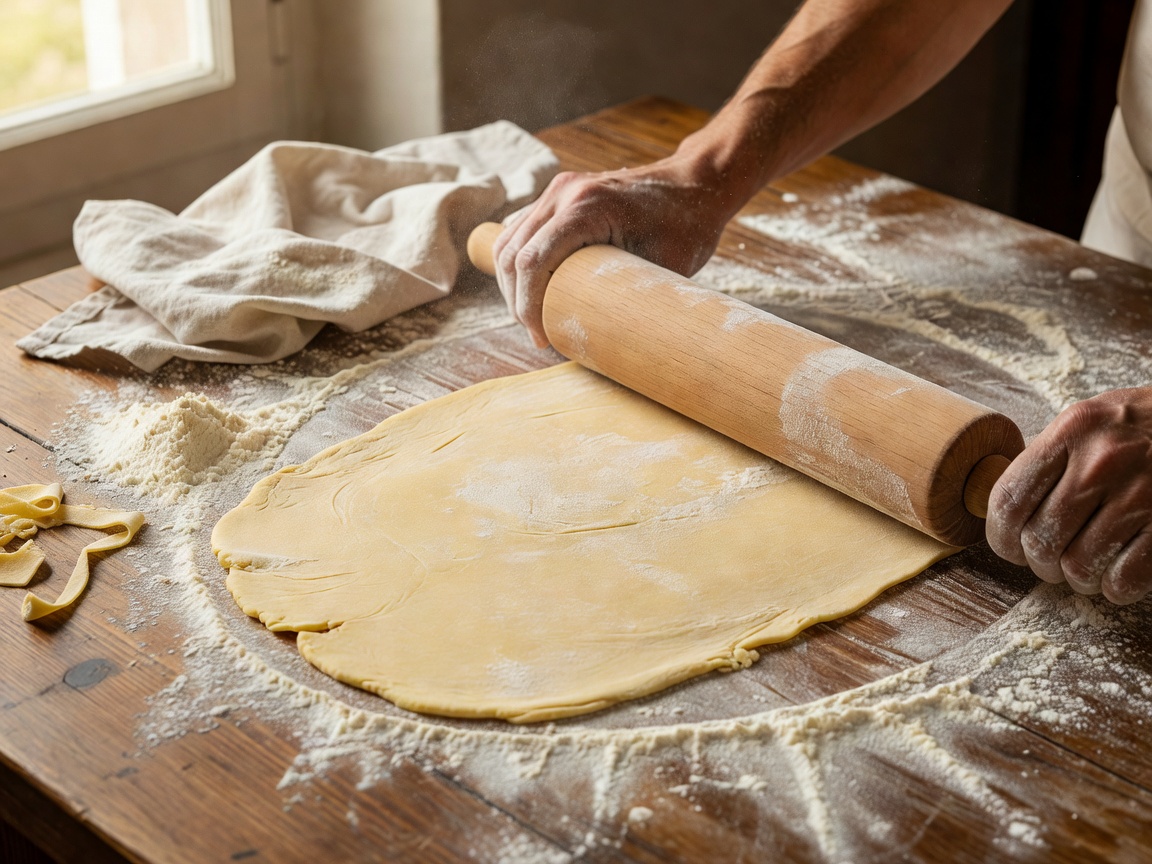
What a typical workshop covers
Most participatory formats move from ingredient briefing to dough preparation, shaping, cooking and tasting. The order may change, but the learning value comes from seeing cause and effect. A dough that feels too dry behaves differently under a rolling pin. A thick edge needs different cooking attention from a thin sheet. A ridged shape holds more sauce than a smooth strand.
Expect practical demonstrations followed by repeated attempts. A good session makes room for questions about flour, hydration, resting and regional context. It should also explain unfamiliar terms. Impasto means dough. Sfoglia means a rolled sheet of pasta. Al dente describes pasta cooked until it still has a firm bite.
Participation formats
Instructor-led sessions suit visitors who want a clear demonstration and a controlled tasting. Participatory sessions place more work in the hands of the group. The latter usually offers stronger tactile learning, but it can feel slower and less uniform. A demonstration is efficient; hands-on work builds muscle memory.
Small groups support individual correction. Participants can compare pressure, thickness and shaping without turning the class into a production line. Ask in advance how many people share a work surface, whether ingredients are weighed individually and whether everyone cooks what they make.
Preparation and equipment
Wear sleeves that stay clear of dough and shoes suitable for a kitchen floor. Tie back long hair. A workshop may provide boards, knives, cutters, rolling pins and aprons, but this should be confirmed rather than assumed. Bring dietary information in writing, especially for allergies. Egg, wheat and dairy can appear across the dough, filling and sauce.
Practical questions matter: Is the room seated or standing? Is there a lift or step-free route? Are instructions offered in a language you understand? Does the format include a meal, or only a tasting? These details affect suitability more than a polished photograph.
Cooking and tasting
The cooking stage connects form to result. Filled pasta needs secure seams. Long strands need enough water and space to separate. Rough surfaces can carry sauce differently from smooth ones. The tasting should identify texture, seasoning and the relationship between pasta and sauce, not simply present a finished plate.
Planning checklist
- Confirm group size and hands-on participation.
- Share allergies, dietary requirements and accessibility needs before booking.
- Ask what tools, clothing and ingredients are supplied.
- Allow time after the class; dough work and a meal can run longer than a demonstration.
- Verify current availability, cancellation terms and language directly with the provider.