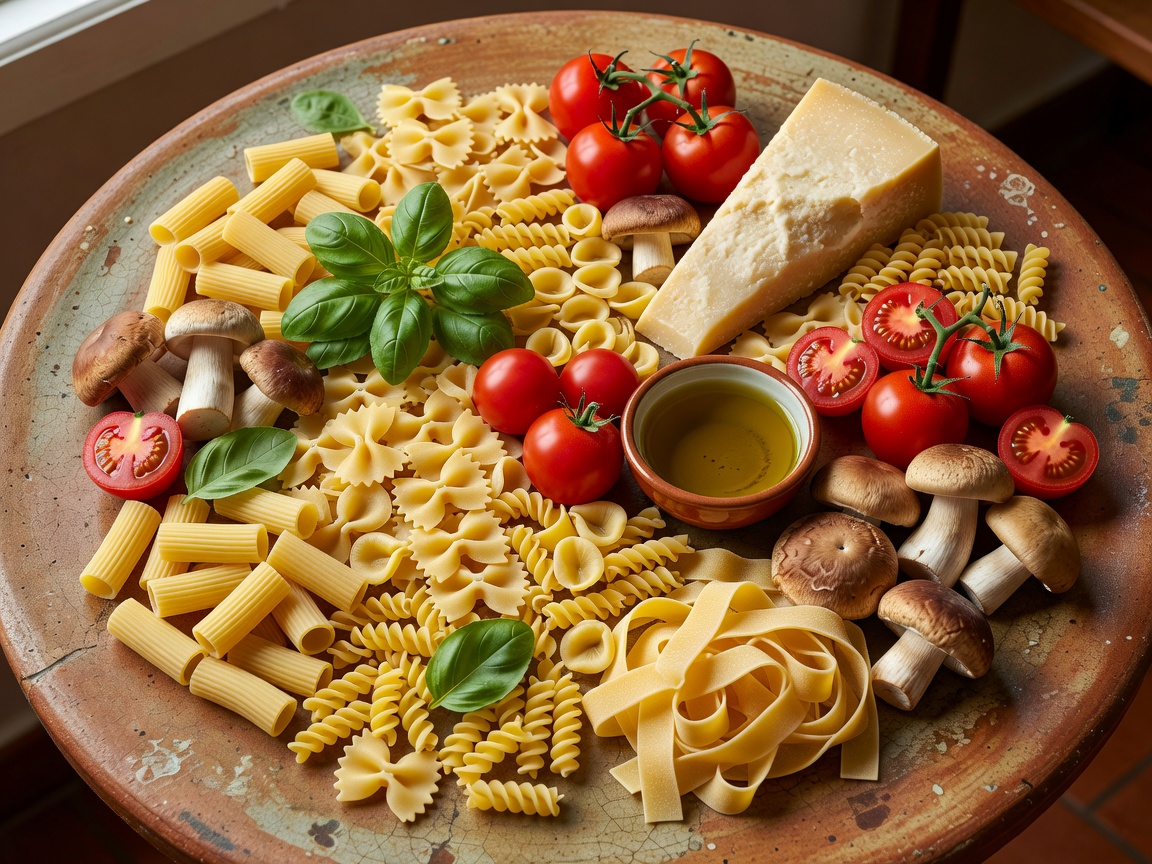
North: soft dough and filled forms
Northern traditions often make visible use of soft wheat flour and eggs, especially where fresh pasta and filled pasta are central to household cooking. Rolled sheets can become ribbons, layered dishes or parcels holding cheese, greens, meat or seasonal vegetables. Butter, cheese, stock and herbs frequently appear beside the pasta, although no single sauce defines the entire north.
Egg dough is not a rule for every northern preparation. Grain, household practice and local availability matter. In a workshop, compare the elasticity of an egg-enriched dough with a water-based dough rather than treating one as more authentic.
Central Italy: handwork and restrained ingredients
Central Italian cooking includes both egg-based rolled pasta and hand-shaped forms made from flour and water. Boards, fingertips and small knives create textures that are difficult to reproduce mechanically. Some shapes are designed for robust sauces; others are served with simple dressings that make texture the main feature.
Names and methods vary between neighbouring areas. Origins of several famous shapes are debated, and a dish associated with one town may have related versions elsewhere. It is more accurate to describe a regional family than to assign every form an exclusive birthplace.
South: durum wheat, water and dried pasta
Southern traditions commonly draw on durum wheat semolina and water. The dough can be firm, resilient and suited to hand shaping or extrusion. Extrusion pushes dough through a shaped die to create forms such as tubes or ridges. Air-drying and storage historically made dried pasta useful beyond the immediate harvest or household kitchen.
Tomato, garlic, olive oil, legumes, vegetables and seafood appear in different combinations. The relationship between shape and sauce remains practical: grooves catch seasoning, tubes hold it inside, and small forms work well with soups or vegetables.
Islands and coastal variation
Sardinia and Sicily demonstrate how island cuisines develop through grain, landscape, trade and contact. Hand-shaped semolina forms, filled pasta, seafood sauces, vegetables, citrus, herbs and preserved ingredients all contribute to diverse local patterns. Similar-looking pasta may have different names, while different-looking shapes may serve comparable purposes.
Fresh and dried pasta are not a simple north-versus-south divide. Both exist throughout Italy. The useful questions are which grain is available, how the dough is shaped, how it is stored and what sauce the cook expects to serve.
A comparison method
| Look at | Useful question |
|---|---|
| Grain | Soft wheat, durum semolina, or a blend? |
| Liquid | Egg, water, or another local practice? |
| Shape | Rolled, cut, hand-formed, filled or extruded? |
| Serving | Does the surface hold, wrap or complement the sauce? |